Two life lessons from curling
And I'm not talking biceps 💪

Hey there!
I recently went curling with my roommate. Our instructor’s name tag said Also Brian. We never met First Brian, but we had a great time breaking out our brooms for something other than cleaning and quidditch.
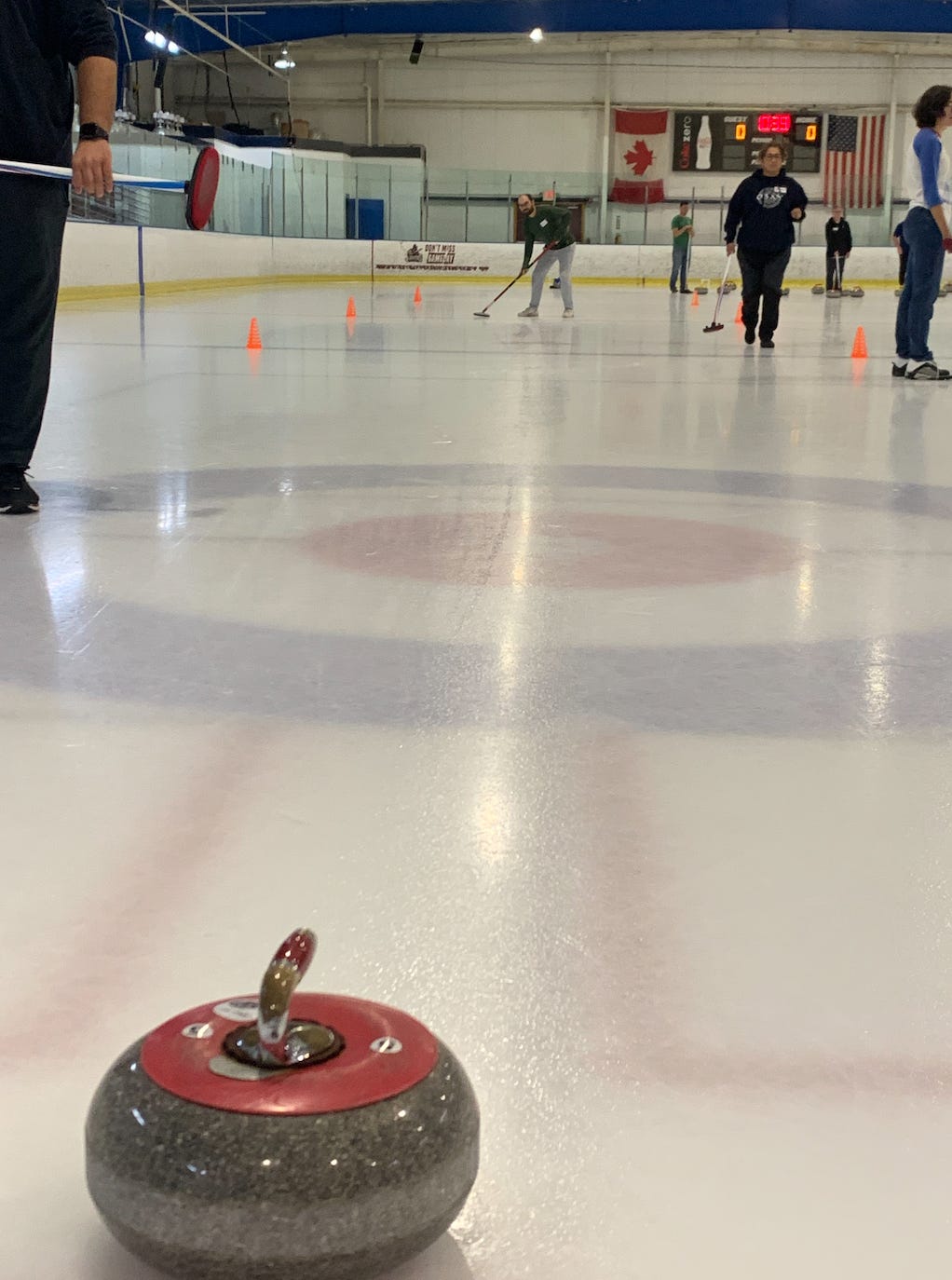
I learned a few things about curling that night — like don’t wear your Vuori sweatpants for a sport where you scrape your knees on ice. And I learned a few things about life.
Here are two life lessons from a night of curling:
Language is the gateway to other worlds
In curling, the thing that slides on the ice is called the stone. The target is called the house. The middle of the house is called the button. And your broom — well, that’s just called the broom.
Before Also Brian taught us what to do with our bodies, he taught us words to make sense of our surroundings. Hog line and vice skip were my favorites.
It’s intimidating to try something new — especially when you don’t have the vocabulary to talk about it. But when you can name an obstacle, it becomes more approachable.
This is what counselors do.
They help you put names to the hard stuff in your life so you can have the communication and confidence needed to navigate it.
The more words I learned while curling, the more comfortable I felt in Also Brian’s world.
Your workplace is its own world. So is your family. And even your hobby.
All of your worlds have words that help the members speak the same language. Those words are the best place to start when welcoming someone new into your world. (“This is the kitchen,” is the first phrase I tell people making their pickleball debut.)
Exercise for you: What’s one of your worlds? Workplace, family, partner, or hobby are good places to start. What are a few words members of your world use to make sense of it?
It takes a team of perspectives to see reality
A curling rink is 150 feet long — too long for my glasses-wearing self to see the entirety of it accurately.
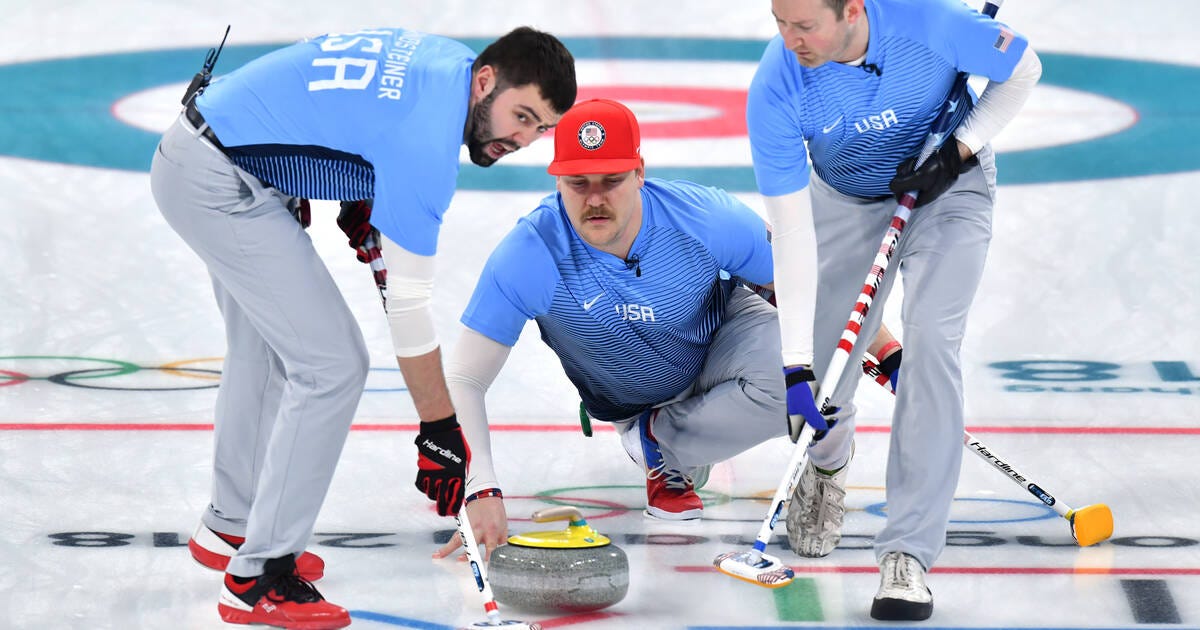
The person releasing the stone loses perspective the further the stone travels down the ice. The person receiving the stone — known as the skip — gains perspective as the stone travels toward them. And the person traveling with the stone has a hard time developing a perspective because they’re constantly stepping and sweeping.
No one team member can see every part of the ice clearly enough to create success on their own. A curling team must communicate their individual perspectives in order to paint an accurate picture of reality.
This is true of your life as well.
You simply can’t see enough of your life on your own to have a crystal clear view of reality. Everyone’s perspective is incomplete.
Think of the woman that swoons over the handsome guy with no integrity and never asks her friends for their opinion of him. Rose-colored glasses prevents her from seeing his character. (Looking at you, Bachelor.)
Or the department lead that doesn’t take time to learn about the problems junior employees are facing.
We all have blindspots. And a communicating community is one of the best ways to uncover them.
It takes a curious team sharing what they see and what they don’t see to get an accurate roadmap of reality.
Exercise for you: Take the world you mentioned above — workplace, family, partner, hobby — and think of whose perspective within it you need to learn about. What questions can you ask them to gain their perspective and increase your accuracy of reality? This is empathy in action.
✌️
— Luke
P.S. The skip has the most accurate view of reality, and they’re the only ones on the ice standing still. If you’re not seeing life clearly, maybe it’s time to slow down.
P.P.S. I wrote this with very little Wi-Fi in the Sequoia National Park. Speaking of perspective, check out this canopy featuring General Grant, known as the nation’s Christmas tree and the second-largest tree in the world.